
المقالات
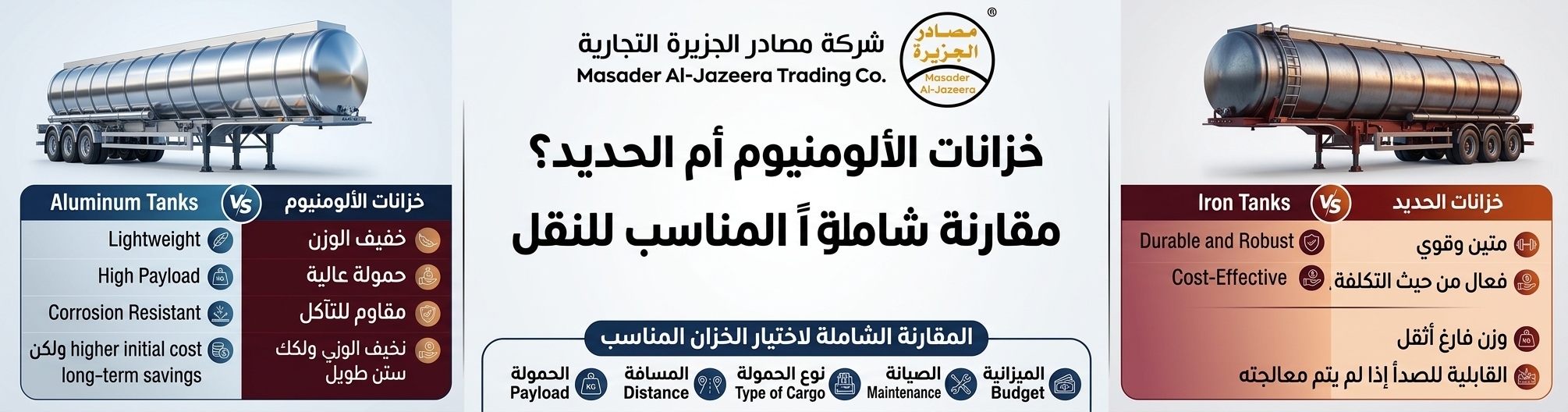
خزانات الألومنيوم أم الحديد؟ مقارنة شاملة لاختيار الخزان المناسب للنقل
خزانات الألومنيوم أم الحديد؟ مقارنة شاملة لاختيار الخزان المناسب للنقل
عند اختيار خزانات الوقود ومعدات نقل السوائل للشاحنات والمركبات الثقيلة، تظهر أمام أصحاب الأساطيل وشركات النقل خيارات متعددة، ويأتي في مقدمتها السؤال الأكثر شيوعًا: خزانات الألومنيوم أم الحديد؟ وأيهما أفضل للاستخدام في قطاع النقل؟
الإجابة لا تعتمد على اسم المعدن فقط، بل ترتبط بمجموعة من العوامل المهمة، مثل وزن الخزان، مقاومة التآكل والصدأ، طبيعة الاستخدام، الحمولة، ظروف التشغيل، سهولة الصيانة، العمر التشغيلي والتكلفة الإجمالية على المدى الطويل.
ومع تطور قطاع النقل والخدمات اللوجستية في المملكة العربية السعودية، أصبحت كفاءة المعدات عنصرًا أساسيًا في إدارة الأساطيل. فاختيار خزان الوقود المناسب لا يتعلق فقط بتخزين ونقل الوقود، وإنما يمكن أن يؤثر أيضًا في كفاءة المركبة، وتكاليف التشغيل، ومتطلبات الصيانة، واستمرارية العمل.
في هذا المقال نستعرض الفرق بين خزانات الألومنيوم وخزانات الحديد، ومزايا وعيوب كل نوع، والعوامل التي يجب وضعها في الاعتبار قبل اتخاذ قرار الشراء.
ما المقصود بخزانات الألومنيوم وخزانات الحديد؟
خزانات الوقود هي مكونات أساسية في الشاحنات والمركبات الثقيلة ومركبات النقل، ويتم تصميمها لتخزين الوقود أو نقله بطريقة تتناسب مع طبيعة المركبة والاستخدام.
ويُستخدم في تصنيع هذه الخزانات عدد من المعادن والمواد، إلا أن الألومنيوم والحديد من أشهر الخيارات في التطبيقات المختلفة.
خزانات الألومنيوم
الألومنيوم معدن يتميز بخفة الوزن ومقاومة جيدة للتآكل، ولذلك أصبح من المواد المستخدمة في العديد من تطبيقات النقل والمركبات التجارية.
وتتميز خزانات الألومنيوم بأنها تجمع بين الوزن المنخفض والمتانة المناسبة للتطبيق، مع قدرة جيدة على مقاومة العوامل البيئية عند تصنيعها ومعالجتها بالشكل الصحيح.
خزانات الحديد
الحديد، أو أنواع الفولاذ المستخدمة في تصنيع الخزانات، يتميز بالقوة والصلابة، ويُستخدم في العديد من التطبيقات التي تحتاج إلى تحمل ميكانيكي مرتفع.
لكن الخزانات الحديدية تحتاج إلى حماية مناسبة من الصدأ والتآكل، خصوصًا عند استخدامها في بيئات تتعرض للرطوبة أو الأملاح أو درجات الحرارة المرتفعة.
خزانات الألومنيوم أم الحديد: ما الفرق الأساسي؟
يمكن تلخيص الاختلاف بين النوعين في عدة نقاط رئيسية:
|
المقارنة |
خزانات الألومنيوم |
خزانات الحديد |
|
الوزن |
أخف نسبيًا |
أثقل |
|
مقاومة التآكل |
جيدة بطبيعتها |
تحتاج إلى حماية ومعالجة مناسبة |
|
الصيانة |
قد تكون أسهل في بعض التطبيقات |
قد تتطلب عناية أكبر ضد الصدأ |
|
القوة |
مناسبة للعديد من تطبيقات النقل |
مرتفعة |
|
تأثير الوزن على الحمولة |
أقل وزنًا قد يساعد في كفاءة الحمولة |
الوزن الأعلى قد يؤثر في الحمولة المتاحة |
|
الاستخدام في النقل |
مناسب للعديد من الشاحنات والأساطيل |
مستخدم على نطاق واسع في تطبيقات متعددة |
|
العمر التشغيلي |
يعتمد على التصميم والاستخدام والصيانة |
يعتمد على التصميم والحماية والصيانة |
ولكن هذه المقارنة العامة لا تعني أن أحد المعدنين مناسب لجميع الاستخدامات. فالقرار الصحيح يجب أن يبدأ من طبيعة التشغيل والمواصفات الفنية للخزان.
أولًا: الوزن.. لماذا يعتبر عنصرًا مهمًا؟
من أهم الفروقات التي تجعل الألومنيوم خيارًا جذابًا في قطاع النقل هو انخفاض وزنه مقارنة بالحديد.
وفي عالم الشاحنات، كل كيلوغرام له أهمية.
فعندما يتم تقليل الوزن غير الضروري في مكونات المركبة، يمكن أن تتوفر مساحة أكبر من القدرة التشغيلية ضمن الحدود النظامية للمركبة، بحسب طبيعة الحمولة والمواصفات المعتمدة.
كما أن الوزن الأخف قد يساعد في تحسين كفاءة التشغيل في بعض التطبيقات، خصوصًا عندما تعمل المركبات لمسافات طويلة أو ضمن أساطيل تقوم برحلات متكررة.
وهنا تظهر أهمية خزانات الألومنيوم للشركات التي تنظر إلى الخزان باعتباره جزءًا من منظومة إدارة الأسطول، وليس مجرد حاوية للوقود.
ثانيًا: مقاومة الصدأ والتآكل
تعتبر مقاومة التآكل من أهم النقاط عند مقارنة خزانات الألومنيوم بخزانات الحديد.
الحديد معرض للصدأ عندما يتعرض للرطوبة والعوامل البيئية لفترات طويلة دون حماية مناسبة.
ولهذا تحتاج الخزانات الحديدية إلى عمليات حماية ومعالجة ودهان مناسبة للحفاظ على سطحها وتقليل احتمالات التآكل.
أما الألومنيوم فيتميز بطبيعته بمقاومة جيدة للتآكل، نتيجة تكوّن طبقة أكسيد على سطحه تساعد على حمايته.
ومع ذلك، لا يعني ذلك أن خزان الألومنيوم غير قابل للتآكل أو التلف. فالتصميم، وجودة التصنيع، ونوعية اللحامات، وطريقة التركيب، وطبيعة البيئة التشغيلية، كلها عوامل تؤثر في عمر الخزان.
ثالثًا: ظروف التشغيل في المملكة العربية السعودية
تفرض البيئة التشغيلية في المملكة العربية السعودية تحديات مختلفة على معدات النقل.
درجات الحرارة المرتفعة، والمسافات الطويلة، والغبار، وبعض المناطق التي تتعرض للرطوبة أو الأملاح، تجعل اختيار المواد المستخدمة في الشاحنات والخزانات أمرًا مهمًا.
ولهذا يجب ألا يكون السؤال فقط:
هل الألومنيوم أفضل من الحديد؟
بل يجب أن يكون:
أي مادة وتصميم ومواصفات تناسب طبيعة عملي؟
فالشاحنة التي تعمل يوميًا لمسافات طويلة تختلف احتياجاتها عن شاحنة تعمل داخل المدن، كما تختلف متطلبات ناقلة الوقود عن المركبات المستخدمة في أعمال الإنشاءات أو الخدمات اللوجستية.
رابعًا: تأثير الخزان على كفاءة أسطول النقل
إدارة الأساطيل الحديثة أصبحت تعتمد على تقليل التكاليف وتحسين الكفاءة التشغيلية.
ويشمل ذلك:
- تقليل الوزن غير الضروري.
- تقليل الأعطال.
- تحسين عمليات الصيانة.
- اختيار قطع الغيار المناسبة.
- رفع كفاءة استهلاك الوقود.
- تقليل فترات توقف الشاحنات.
- زيادة الاعتمادية التشغيلية.
ومن هذه الزاوية، يمكن لخزانات الألومنيوم أن تكون خيارًا مهمًا لبعض تطبيقات النقل، خصوصًا عندما يكون خفض الوزن ومقاومة التآكل من الأولويات.
لكن يجب التأكيد على أن استهلاك الوقود لا يتحدد بالخزان وحده؛ إذ يتأثر بعوامل عديدة مثل وزن المركبة والحمولة ونوع المحرك والإطارات وطريقة القيادة والمسار والصيانة.
خامسًا: المتانة والقوة
من الأسباب التي تجعل الحديد مستخدمًا في العديد من التطبيقات هو قوته وصلابته.
ولكن المقارنة بين الألومنيوم والحديد من حيث المتانة يجب أن تتم بحذر.
فليس من الصحيح القول إن المادة وحدها تحدد قوة الخزان.
هناك عوامل أخرى لا تقل أهمية، منها:
1. سماكة المادة
سماكة المعدن تؤثر في قدرة الخزان على تحمل ظروف التشغيل.
2. التصميم الهندسي
الشكل الهندسي للخزان ومواقع الدعامات ونقاط التثبيت تؤثر بشكل كبير في الأداء.
3. جودة اللحام
جودة اللحامات من أهم عناصر تصنيع الخزانات، لأن أي ضعف في مناطق اللحام قد يؤثر في سلامة الخزان.
4. جودة التصنيع
الخزان المصمم والمصنع وفق مواصفات مناسبة يمكن أن يقدم أداءً مختلفًا تمامًا عن منتج منخفض الجودة، حتى لو كان كلاهما مصنوعًا من نفس المادة.
5. طريقة الاستخدام
الاستخدام الصحيح والصيانة الدورية عاملان أساسيان في إطالة العمر التشغيلي.
سادسًا: صيانة خزانات الألومنيوم وخزانات الحديد
الصيانة عنصر أساسي للحفاظ على أداء الخزان.
صيانة خزانات الألومنيوم
ينبغي فحص الخزان بصورة دورية للتأكد من:
- عدم وجود تسرب.
- سلامة اللحامات.
- سلامة نقاط التثبيت.
- عدم وجود تشققات أو أضرار ميكانيكية.
- سلامة الوصلات.
- عدم وجود تآكل موضعي أو تفاعل مع مواد أخرى.
- سلامة الغطاء وفتحات التعبئة.
صيانة خزانات الحديد
إضافة إلى الفحوصات السابقة، يجب إعطاء اهتمام خاص إلى:
- ظهور الصدأ.
- تقشر الطلاء أو طبقة الحماية.
- وجود مناطق ضعيفة نتيجة التآكل.
- سلامة طبقات الحماية الخارجية.
- وجود أي علامات على تسرب أو تآكل داخلي.
والقاعدة الأساسية هي أن الفحص الدوري أفضل من انتظار ظهور المشكلة.
سابعًا: العمر التشغيلي للخزان
من الخطأ تحديد عمر ثابت لخزان الألومنيوم أو الحديد دون معرفة ظروف استخدامه.
فالعمر التشغيلي يعتمد على:
- جودة المادة.
- جودة التصنيع.
- طبيعة الوقود أو السائل.
- درجات الحرارة.
- ظروف الطرق.
- الاهتزازات.
- طريقة التركيب.
- جودة الصيانة.
- معدل الاستخدام.
- البيئة المحيطة.
لذلك، قد يعمل خزان جيد الصنع لسنوات طويلة عند استخدامه وصيانته بشكل صحيح، بينما قد يتعرض خزان آخر لمشكلات مبكرة بسبب سوء التصنيع أو التركيب أو الإهمال.
هل خزانات الألومنيوم أكثر كفاءة؟
يمكن أن توفر خزانات الألومنيوم مزايا تشغيلية مهمة في بعض تطبيقات النقل، وأبرزها الوزن الأقل ومقاومة التآكل.
لكن كلمة "كفاءة" يجب أن تُفهم بصورة شاملة.
فكفاءة الخزان تعني أن يكون:
- مناسبًا للمركبة.
- مناسبًا لنوع الوقود.
- مناسبًا لسعة التخزين المطلوبة.
- آمنًا في الاستخدام.
- جيد التصنيع.
- مقاومًا لظروف التشغيل.
- سهل الفحص والصيانة.
- مناسبًا لمتطلبات الأسطول.
ولهذا لا ينبغي اختيار الخزان بناءً على المادة وحدها.
متى يكون خزان الألومنيوم خيارًا مناسبًا؟
يمكن التفكير في خزانات الألومنيوم عندما تكون الأولوية لـ:
الوزن الخفيف
خصوصًا في الشاحنات التي تحتاج إلى إدارة دقيقة للوزن والحمولة.
مقاومة التآكل
في التطبيقات التي يكون فيها التعرض للعوامل البيئية أحد الاعتبارات المهمة.
التشغيل لمسافات طويلة
عندما تكون كفاءة الوزن وإدارة الأسطول من العوامل المهمة.
تقليل متطلبات الحماية من الصدأ
مقارنة بالخزانات الحديدية التي تحتاج إلى حماية مناسبة من التآكل.
الاستخدام في أساطيل النقل الحديثة
خصوصًا عندما تكون الشركة مهتمة بتحسين الكفاءة التشغيلية للمركبات على المدى الطويل.
ومتى يكون الحديد خيارًا مناسبًا؟
قد تكون الخزانات الحديدية مناسبة لبعض التطبيقات التي تتطلب خصائص ميكانيكية معينة أو عندما يكون التصميم والمواصفات والتكلفة عوامل رئيسية في الاختيار.
ويجب عند اختيار خزان حديدي التأكد من وجود:
- حماية مناسبة من التآكل.
- تصنيع عالي الجودة.
- لحامات جيدة.
- سماكة مناسبة.
- نظام تثبيت آمن.
- صيانة دورية.
فالحديد ليس مادة غير مناسبة للخزانات، بل هو خيار مستخدم في العديد من التطبيقات، ولكن يجب اختيار المنتج المناسب للاستخدام المناسب.
السعر: هل الألومنيوم أغلى من الحديد؟
قد يختلف سعر الخزان بحسب المادة والتصميم والسعة والمواصفات وجودة التصنيع.
وعند مقارنة السعر، من الأفضل عدم النظر إلى سعر الشراء فقط.
بل يجب النظر إلى التكلفة الإجمالية للملكية، والتي يمكن أن تشمل:
- سعر الخزان.
- تكلفة التركيب.
- تكاليف الصيانة.
- الحماية من التآكل.
- تكلفة التوقفات.
- العمر التشغيلي.
- تأثير الوزن على التشغيل.
- تكاليف الإصلاح والاستبدال.
ولهذا قد يكون المنتج الأقل سعرًا عند الشراء ليس بالضرورة الأقل تكلفة على مدى سنوات الاستخدام.
كيف تختار خزان الوقود المناسب لشاحنتك؟
قبل شراء الخزان، من المهم الإجابة عن مجموعة من الأسئلة:
ما نوع الشاحنة؟
شاحنة نقل ثقيل؟ ناقلة؟ قاطرة؟ مركبة خدمات؟
ما السعة المطلوبة؟
يجب تحديد سعة الخزان بناءً على احتياجات التشغيل والمساحة المتاحة ومتطلبات المركبة.
ما طبيعة الاستخدام؟
هل تعمل الشاحنة داخل المدن أم لمسافات طويلة؟
ما ظروف البيئة؟
هل تعمل المركبة في درجات حرارة مرتفعة؟ مناطق رطبة؟ مناطق ساحلية؟ طرق صحراوية؟
ما الوزن المسموح؟
يجب مراعاة الوزن الإجمالي للمركبة والحمولة والأنظمة ذات العلاقة.
ما نوع الوقود؟
يجب أن يكون تصميم الخزان مناسبًا للوقود المستخدم.
ما مستوى الحماية المطلوبة؟
يجب التأكد من جودة التصميم ووسائل الحماية والتركيب.
هل الخزان متوافق مع المركبة؟
التوافق بين الخزان والشاحنة من أهم النقاط التي يجب التأكد منها قبل الشراء.
أخطاء شائعة عند شراء خزانات الوقود
هناك عدد من الأخطاء التي يمكن أن تؤثر في أداء الخزان والأسطول.
اختيار الخزان بناءً على السعر فقط
السعر عنصر مهم، لكنه ليس العامل الوحيد.
تجاهل الوزن
قد يؤدي اختيار مكونات أثقل من اللازم إلى زيادة الوزن التشغيلي للمركبة.
عدم التأكد من جودة التصنيع
المادة الجيدة تحتاج إلى تصنيع جيد حتى تحقق النتائج المطلوبة.
إهمال الصيانة
عدم فحص الخزان بصورة دورية قد يؤدي إلى اكتشاف المشكلات بعد تفاقمها.
اختيار سعة غير مناسبة
الخزان الأكبر ليس دائمًا هو الخيار الأفضل؛ يجب أن تتوافق السعة مع احتياجات المركبة وطبيعة التشغيل.
تجاهل طريقة التركيب
حتى أفضل الخزانات يمكن أن تتعرض لمشكلات إذا لم يتم تركيبها بالطريقة الصحيحة.
خزانات الألومنيوم في قطاع النقل الحديث
مع توسع قطاع الخدمات اللوجستية والنقل في المملكة العربية السعودية، تتجه الشركات بصورة متزايدة إلى البحث عن حلول تساعدها على رفع كفاءة التشغيل وتحسين إدارة الأساطيل.
وتدخل خزانات الوقود ضمن هذه المنظومة.
فالشاحنة الحديثة لا تعتمد على المحرك وحده لتحقيق الكفاءة، وإنما تعتمد على تكامل مجموعة كبيرة من المكونات، بداية من الشاسيه والإطارات والجنوط وأنظمة التعليق، وصولًا إلى خزانات الوقود وقطع الغيار وبرامج الصيانة.
ومن هنا تظهر أهمية اختيار مكونات تجمع بين الجودة والكفاءة والاعتمادية.
دور مصادر الجزيرة في حلول الخزانات وقطع غيار الشاحنات
تقدم مصادر الجزيرة حلولًا ومنتجات موجهة لقطاع النقل والشاحنات والمقطورات، مع التركيز على احتياجات السوق السعودي وتوفير المنتجات المناسبة لتطبيقات النقل المختلفة.
وتأتي خزانات الوقود المصنوعة من الألومنيوم ضمن الحلول التي تساعد شركات النقل وأصحاب الأساطيل على الاستفادة من مزايا الوزن الخفيف ومقاومة التآكل، مع أهمية اختيار السعة والتصميم والمواصفات المناسبة لكل مركبة.
كما يرتبط أداء الخزان بمنظومة أكبر تشمل قطع الغيار والصيانة والمكونات المختلفة للشاحنات والمقطورات.
ولهذا فإن اختيار مورد متخصص في قطاع النقل يمكن أن يساعد أصحاب الأساطيل على الوصول إلى حلول أكثر توافقًا مع احتياجات التشغيل.
خزانات الألومنيوم أم الحديد: أيهما تختار؟
لا توجد إجابة واحدة تصلح لجميع الشاحنات والاستخدامات.
يمكن أن تكون خزانات الألومنيوم خيارًا مناسبًا عندما تكون خفة الوزن ومقاومة التآكل وكفاءة التشغيل من الأولويات.
وفي المقابل، يمكن أن تكون الخزانات الحديدية مناسبة في تطبيقات تحتاج إلى خصائص معينة من حيث القوة والتصميم والتكلفة، بشرط توفير الحماية المناسبة من التآكل والصيانة المطلوبة.
لذلك فإن القرار الأفضل يبدأ من دراسة:
نوع المركبة + طبيعة التشغيل + السعة + الوزن + البيئة + جودة التصنيع + متطلبات الصيانة + التكلفة الإجمالية.
الخلاصة
عند المقارنة بين خزانات الألومنيوم وخزانات الحديد، نجد أن لكل مادة خصائصها ومجالات استخدامها.
الألومنيوم يتميز بخفة الوزن ومقاومة جيدة للتآكل، وهو ما يجعله خيارًا جذابًا للعديد من تطبيقات النقل الحديثة.
أما الحديد فيتميز بالقوة والصلابة ويظل مستخدمًا في العديد من التطبيقات، مع الحاجة إلى حماية مناسبة من الصدأ والتآكل.
وفي النهاية، لا يعتمد نجاح الخزان على المادة وحدها، وإنما على جودة التصميم والتصنيع والتركيب والصيانة ومدى توافق الخزان مع الشاحنة وطبيعة العمل.
ولشركات النقل وأصحاب الأساطيل في المملكة العربية السعودية، فإن اختيار خزان مناسب ليس مجرد عملية شراء لمكون من مكونات الشاحنة، بل هو جزء من استراتيجية أكبر تهدف إلى تحسين كفاءة التشغيل، تقليل الأعطال، إدارة الوزن، ورفع الاعتمادية في عمليات النقل اليومية.
مصادر الجزيرة توفر حلولًا لقطاع الشاحنات والمقطورات والنقل، بما يساعد الشركات على اختيار المنتجات والمكونات التي تتناسب مع احتياجات أساطيلها وتطبيقاتها التشغيلية.
Aluminum Tanks or Steel Tanks? A Comprehensive Comparison for Transportation
When choosing fuel tanks and liquid transportation equipment for trucks and heavy-duty vehicles, fleet owners and transportation companies often face an important question:
Aluminum tanks or steel tanks—which is the better choice?
The answer depends on more than just the type of metal used. Factors such as tank weight, corrosion resistance, operating conditions, load capacity, maintenance requirements, durability, safety, and total operating costs all play an important role in determining the most suitable option.
With the continued development of the transportation and logistics sector in Saudi Arabia, fleet efficiency has become increasingly important. A fuel tank is not simply a container for storing fuel. Its material, design, capacity, and installation can all contribute to the overall efficiency and reliability of a truck or transportation fleet.
This comprehensive guide explores the differences between aluminum and steel fuel tanks, their advantages and limitations, and the key factors fleet owners should consider before making a purchasing decision.
What Are Aluminum and Steel Fuel Tanks?
Fuel tanks are essential components of trucks, commercial vehicles, transportation equipment, and heavy-duty fleets. They are designed to store or transport fuel while meeting the requirements of the vehicle and its operating environment.
Different materials can be used to manufacture fuel tanks, but aluminum and steel remain two of the most widely used options.
Aluminum Fuel Tanks
Aluminum is a lightweight metal with good corrosion resistance, making it an attractive material for many transportation applications.
Aluminum fuel tanks combine relatively low weight with suitable mechanical performance when properly designed and manufactured. Their natural resistance to corrosion can also be an important advantage in demanding operating environments.
Steel Fuel Tanks
Steel is widely recognized for its strength and durability and is used in many transportation and industrial applications.
Steel fuel tanks can provide excellent mechanical strength, but they require appropriate protection against corrosion, particularly when exposed to moisture, salts, harsh environments, and long-term outdoor operation.
Aluminum Tanks vs. Steel Tanks: Key Differences
The differences between aluminum and steel fuel tanks can be summarized across several important factors:
|
Factor |
Aluminum Tanks |
Steel Tanks |
|
Weight |
Relatively lightweight |
Heavier |
|
Corrosion resistance |
Naturally good |
Requires suitable protection |
|
Maintenance |
Can be easier in some applications |
Requires attention to corrosion protection |
|
Strength |
Suitable for many transportation applications |
High mechanical strength |
|
Impact on payload |
Lower tank weight may help preserve payload capacity |
Higher weight may affect available payload |
|
Transportation applications |
Widely suitable for modern fleets |
Widely used in various applications |
|
Service life |
Depends on design, quality, use, and maintenance |
Depends on design, protection, use, and maintenance |
This comparison does not mean that one material is universally better than the other. The right choice depends on the vehicle, application, operating environment, and technical requirements.
1. Weight: Why Does It Matter?
One of the most important advantages of aluminum in transportation applications is its lower weight compared with steel.
In heavy-duty transportation, every kilogram matters.
Reducing unnecessary weight can help transportation companies manage vehicle weight more efficiently and, within applicable regulations and vehicle specifications, preserve more capacity for the intended payload.
Lower component weight can also be beneficial for vehicles operating long distances or completing frequent transportation cycles.
This is one reason aluminum fuel tanks have become an attractive option for many modern transportation fleets.
However, fuel efficiency is influenced by many factors—not only the fuel tank. Engine type, total vehicle weight, payload, tires, driving behavior, route conditions, aerodynamics, and maintenance can all affect fuel consumption.
2. Corrosion and Rust Resistance
Corrosion resistance is one of the most important factors when comparing aluminum and steel fuel tanks.
Steel can be susceptible to rust when exposed to moisture and environmental conditions without adequate protection.
For this reason, steel tanks often require appropriate coatings, surface treatments, and regular inspections to help protect them against corrosion.
Aluminum, on the other hand, naturally develops a thin oxide layer on its surface that provides a degree of protection against corrosion.
However, this does not mean aluminum is completely immune to corrosion or damage.
The actual performance of an aluminum tank depends on several factors, including:
- Material quality
- Manufacturing quality
- Welding quality
- Tank design
- Installation
- Operating environment
- Contact with other materials
- Maintenance practices
Therefore, material selection should always be considered together with the overall tank design and manufacturing quality.
3. Operating Conditions in Saudi Arabia
Transportation equipment operating in Saudi Arabia can face challenging environmental conditions.
High temperatures, long-distance transportation, dust, road conditions, and exposure to humidity or salty environments in certain areas can all influence the performance and service life of vehicle components.
This makes material selection an important part of transportation equipment planning.
Instead of simply asking:
"Is aluminum better than steel?"
fleet owners should ask:
"Which material, design, and specification are most suitable for my application?"
A truck operating long-distance routes may have different requirements from a vehicle operating primarily within urban areas.
Likewise, a fuel transportation vehicle may have different requirements from a truck used in construction, logistics, or general freight transportation.
4. The Impact of Fuel Tanks on Fleet Efficiency
Modern fleet management focuses heavily on improving operational efficiency and controlling costs.
This includes:
- Reducing unnecessary vehicle weight
- Preventing unexpected breakdowns
- Improving maintenance practices
- Selecting suitable spare parts
- Managing fuel consumption
- Reducing vehicle downtime
- Increasing operational reliability
From this perspective, aluminum fuel tanks can offer valuable benefits in applications where weight reduction and corrosion resistance are important priorities.
However, fleet efficiency should always be evaluated as a complete system rather than based on one component alone.
5. Durability and Strength
One of the main reasons steel continues to be widely used is its strength and mechanical durability.
However, comparing aluminum and steel simply by asking which material is stronger can be misleading.
The strength and durability of a fuel tank depend on much more than the raw material.
Tank Thickness
Material thickness can influence the tank's ability to withstand operating conditions.
Engineering Design
The shape of the tank, structural supports, mounting points, and reinforcement design can have a significant impact on performance.
Welding Quality
High-quality welding is critical because weak or defective welds can compromise the integrity of the tank.
Manufacturing Quality
A properly engineered and manufactured tank can perform very differently from a poorly manufactured product, even when both are made from the same material.
Operating Conditions
Road conditions, vibration, loading, temperature, and maintenance can all affect the long-term durability of a tank.
6. Aluminum Tank vs. Steel Tank Maintenance
Regular maintenance is essential for maintaining fuel tank performance and extending service life.
Aluminum Tank Maintenance
Regular inspections should check for:
- Fuel leaks
- Damaged welds
- Loose or damaged mounting points
- Cracks
- Mechanical damage
- Damaged fittings
- Problems around filler openings
- Signs of localized corrosion or material interaction
Steel Tank Maintenance
Steel tanks require similar inspections, with additional attention to:
- Rust formation
- Damaged protective coatings
- Paint deterioration
- Areas affected by corrosion
- Structural weakness caused by corrosion
- Signs of leakage
- Internal and external corrosion
The basic principle is simple:
Preventive inspection is better than waiting for a failure to occur.
7. Service Life of Aluminum and Steel Tanks
It is difficult to assign a fixed service life to either aluminum or steel fuel tanks without considering the actual operating conditions.
Service life can be affected by:
- Material quality
- Manufacturing standards
- Tank design
- Type of fuel
- Operating temperature
- Road conditions
- Vibration
- Installation quality
- Maintenance
- Frequency of use
- Environmental exposure
A high-quality tank that is properly installed and maintained can provide reliable service for many years.
On the other hand, poor manufacturing, improper installation, or inadequate maintenance can significantly shorten the service life of any tank, regardless of its material.
Are Aluminum Fuel Tanks More Efficient?
Aluminum fuel tanks can provide several operational advantages, particularly their lower weight and good resistance to corrosion.
However, the word "efficiency" should be considered in a broader context.
An efficient fuel tank should be:
- Suitable for the vehicle
- Appropriate for the fuel being used
- Correctly sized
- Properly engineered
- Safe for its intended application
- Resistant to the operating environment
- Easy to inspect and maintain
- Correctly installed
Therefore, choosing a fuel tank based solely on the material is not enough.
When Is an Aluminum Fuel Tank a Good Choice?
Aluminum fuel tanks can be particularly attractive when the following factors are important:
Lightweight Construction
For fleets where vehicle weight and payload management are important considerations.
Corrosion Resistance
For applications where environmental exposure and corrosion resistance are key concerns.
Long-Distance Transportation
For trucks that regularly operate long routes and where overall vehicle efficiency is a major consideration.
Reduced Corrosion Protection Requirements
Compared with steel tanks, aluminum naturally offers greater resistance to rust, although it still requires proper inspection and care.
Modern Fleet Applications
For transportation companies seeking to optimize vehicle components and improve overall fleet efficiency.
When Is a Steel Fuel Tank a Suitable Choice?
Steel fuel tanks can be appropriate for applications where specific mechanical properties, structural requirements, or cost considerations are important.
When selecting a steel tank, fleet owners should pay particular attention to:
- Corrosion protection
- Material thickness
- Manufacturing quality
- Welding quality
- Mounting system
- Surface protection
- Maintenance requirements
Steel remains a widely used material in transportation and industrial applications, and its suitability depends largely on the specific design and intended use.
Cost: Are Aluminum Tanks More Expensive Than Steel Tanks?
The price of a fuel tank depends on many factors, including:
- Material
- Capacity
- Design
- Manufacturing process
- Specifications
- Mounting system
- Quality level
When comparing prices, fleet owners should avoid looking only at the initial purchase price.
Instead, they should consider the total cost of ownership.
This can include:
- Initial tank price
- Installation costs
- Maintenance
- Corrosion protection
- Repair costs
- Vehicle downtime
- Service life
- Weight-related operating considerations
- Replacement costs
A tank with a lower initial price is not necessarily the least expensive option over several years of operation.
How to Choose the Right Fuel Tank for Your Truck
Before purchasing a fuel tank, fleet owners should consider several important questions.
What Type of Truck Is It?
Is it a tractor unit, heavy-duty truck, tanker, service vehicle, or another type of commercial vehicle?
What Capacity Is Required?
The required capacity should be determined according to operating needs, available installation space, vehicle specifications, and applicable requirements.
What Is the Operating Environment?
Does the vehicle operate primarily in cities, on highways, in desert areas, or on long-distance routes?
What Environmental Conditions Apply?
Will the truck operate in high temperatures, dusty areas, humid environments, or coastal regions?
What Are the Vehicle Weight Requirements?
The total vehicle weight, payload, and applicable regulations should be considered when selecting the tank.
What Type of Fuel Is Being Used?
The tank must be suitable for its intended fuel and application.
Is the Tank Compatible With the Vehicle?
Compatibility between the tank, truck chassis, mounting points, fuel system, and available space is essential.
Common Mistakes When Buying Fuel Tanks
Several common mistakes can lead to higher operating costs or unnecessary maintenance problems.
Choosing a Tank Based Only on Price
Price is important, but it should not be the only purchasing criterion.
Ignoring Weight
Installing unnecessarily heavy components can increase the vehicle's operating weight.
Failing to Verify Manufacturing Quality
High-quality material cannot compensate for poor engineering or manufacturing.
Neglecting Preventive Maintenance
Regular inspection can identify problems before they become major failures.
Selecting the Wrong Capacity
A larger tank is not automatically better. Capacity should match the vehicle and its operating requirements.
Ignoring Installation Quality
Even a high-quality tank can develop problems if it is incorrectly installed or poorly secured.
Aluminum Fuel Tanks and the Future of Modern Transportation
The growth of transportation and logistics in Saudi Arabia is increasing the demand for efficient, reliable, and durable transportation equipment.
Fuel tanks are part of this larger system.
A modern truck does not rely only on its engine for operational efficiency. Performance also depends on the integration of many components, including:
- Chassis
- Axles
- Suspension systems
- Wheels and rims
- Fuel tanks
- Spare parts
- Trailer components
- Maintenance systems
Choosing components that combine quality, reliability, and suitable specifications can help fleet operators build more efficient transportation operations.
Masader Al Jazeera: Solutions for Trucks, Trailers, and Transportation
Masader Al Jazeera provides products and solutions for the transportation, truck, and trailer sectors, with a focus on the requirements of the Saudi market.
Its range of transportation solutions includes aluminum fuel tanks and various truck and trailer spare parts designed to meet different operational requirements.
For fleet owners considering aluminum fuel tanks, selecting the correct capacity, design, specifications, and installation method is essential to achieving the expected operational benefits.
Fuel tanks are also part of a larger transportation system that includes spare parts, maintenance, wheels, chassis components, trailers, and other heavy-duty equipment.
Working with a specialized supplier can help transportation companies identify products that are more closely aligned with their vehicle specifications and operational requirements.
Aluminum Tanks or Steel Tanks: Which One Should You Choose?
There is no single answer that applies to every truck or transportation application.
Aluminum fuel tanks can be an attractive option when lightweight construction, corrosion resistance, and operational efficiency are important priorities.
Steel fuel tanks can be suitable for applications where strength, structural characteristics, specific designs, and cost considerations are important.
The right decision should therefore be based on:
Vehicle Type + Operating Conditions + Tank Capacity + Weight + Environment + Manufacturing Quality + Maintenance Requirements + Total Cost of Ownership
Rather than choosing based on material alone, fleet operators should evaluate the complete application.
Conclusion
When comparing aluminum fuel tanks and steel fuel tanks, both materials offer specific advantages and can be suitable for different transportation applications.
Aluminum is known for its relatively low weight and good corrosion resistance, making it an attractive choice for many modern transportation applications.
Steel offers high strength and durability and continues to be widely used across transportation and industrial sectors, provided that appropriate corrosion protection and maintenance are implemented.
Ultimately, fuel tank performance depends not only on the material but also on engineering design, manufacturing quality, installation, maintenance, vehicle compatibility, and operating conditions.
For transportation companies and fleet owners in Saudi Arabia, selecting the right fuel tank is more than simply purchasing a vehicle component. It is part of a broader strategy focused on improving operational efficiency, managing vehicle weight, reducing maintenance issues, and maintaining reliable transportation operations.
Masader Al Jazeera provides solutions for trucks, trailers, fuel tanks, and transportation equipment, helping businesses find products suited to the requirements of their fleets and daily operations.
الكلمات المفتاحية العربية
الكلمات الرئيسية:
- خزانات الألومنيوم
- خزانات الحديد
- خزانات وقود الألومنيوم
- خزانات وقود الحديد
- خزانات وقود للشاحنات
- خزان وقود شاحنة
- خزانات الوقود للشاحنات
- خزانات وقود الألومنيوم في السعودية
- خزانات وقود للشاحنات في السعودية
- خزانات الألومنيوم للشاحنات
- خزان ألمنيوم للشاحنات
- خزان حديد للشاحنات
- مقارنة خزانات الألومنيوم والحديد
- الفرق بين خزانات الألومنيوم والحديد
- أفضل خزانات الوقود للشاحنات
- أفضل خزان وقود للشاحنات
- خزانات نقل الوقود
- خزانات وقود للمقطورات
- خزانات الشاحنات الثقيلة
- خزانات الوقود في السعودية
- خزانات شاحنات نقل الوقود
- قطع غيار الشاحنات
- مستلزمات الشاحنات
- معدات النقل الثقيل
- حلول النقل والشاحنات
- خزانات الوقود عالية الجودة
- خزانات وقود مقاومة للصدأ
- خزانات ألومنيوم عالية الجودة
- مصادر الجزيرة
- خزانات الألومنيوم مصادر الجزيرة
English Keywords
Primary Keywords:
- Aluminum fuel tanks
- Steel fuel tanks
- Aluminum vs steel fuel tanks
- Aluminum fuel tanks for trucks
- Steel fuel tanks for trucks
- Truck fuel tanks
- Heavy duty truck fuel tanks
- Aluminum truck tanks
- Steel truck tanks
- Fuel tanks for trucks in Saudi Arabia
- Aluminum fuel tanks Saudi Arabia
- Truck fuel tanks Saudi Arabia
- Best fuel tanks for trucks
- Best truck fuel tank
- Fuel tanks for heavy trucks
- Heavy duty fuel tanks
- Truck fuel storage tanks
- Fuel transportation tanks
- Aluminum fuel tank manufacturers
- Truck spare parts Saudi Arabia
- Heavy truck spare parts
- Truck and trailer parts
- Transportation equipment Saudi Arabia
- Corrosion resistant fuel tanks
- Lightweight fuel tanks
- Aluminum fuel tank vs steel
- Aluminum tank benefits
- Steel tank benefits
- Fuel tank maintenance
- Truck fuel tank solutions
- Masader Al Jazeera
Long-Tail SEO Keywords
عربي:
- الفرق بين خزانات الألومنيوم والحديد للشاحنات
- أيهما أفضل خزانات الألومنيوم أم الحديد
- أفضل نوع خزان وقود للشاحنات
- مميزات خزانات الألومنيوم للشاحنات
- مميزات خزانات الحديد للشاحنات
- خزانات ألومنيوم للوقود في السعودية
- شراء خزانات وقود للشاحنات في السعودية
- أفضل خزانات وقود للشاحنات الثقيلة
- خزانات وقود مقاومة للصدأ للشاحنات
- كيفية اختيار خزان الوقود المناسب للشاحنة
English:
- Aluminum vs steel fuel tanks for trucks
- Which is better aluminum or steel fuel tanks
- Best fuel tank material for trucks
- Benefits of aluminum fuel tanks for trucks
- Benefits of steel fuel tanks for trucks
- Best fuel tanks for heavy duty trucks
- How to choose a truck fuel tank
- Aluminum fuel tanks for heavy trucks
- Corrosion resistant fuel tanks for trucks
- Fuel tank solutions for transportation fleets